Meet Wittenberg University’s New President, Christian M. M. Brady
Christian M. M. Brady joins Wittenberg University as president, bringing a distinguished record of leadership
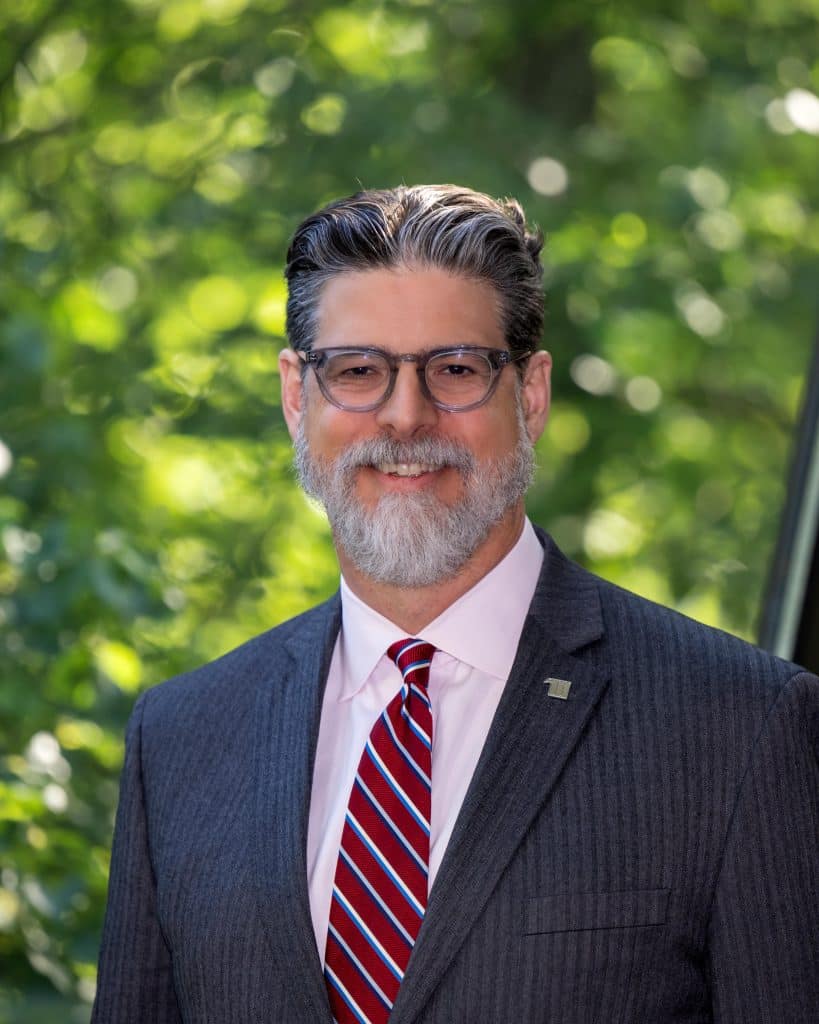
For Christian M. M. Brady, joining Wittenberg University as president wasn’t just a career move – it was a calling.
“It was the mission and the values that drew me, and in particular, it was the commitment to both liberal arts education and helping students discern their calling,” Brady says. “I’m a liberal arts person through and through.”
Brady, who holds degrees from Cornell University, Wheaton College, and the University of Oxford, began his academic career at Tulane University as an assistant professor and director of the interdisciplinary program in Jewish Studies. After earning tenure, he went on to lead Tulane’s Honors Program.
“[After graduation] I felt at that point really called to be at a secular institution,” Brady says.
That calling ultimately grew into a 30-year career focused on creating meaningful academic experiences for students. Brady’s time at the University of Kentucky was especially formative. There, he developed a reputation as both a builder and a problem-solver–someone who could design innovative academic structures while addressing the complex needs of a large and diverse student body.
“In general terms, what I’ve spent the last 30 years doing is building academic programs that engage our students where they are, seeking to really engage them fully, in particular in honors work,” Brady says. “What we were building in the honors college [at University of Kentucky] is the sort of program that we have at Wittenberg, so I’m really excited about that.”
“At Kentucky, not only did I get the experience of building a brand new [honors] college, taking it from nonexistence to national prominence, but then in the middle, I was asked to take on the College of Arts and Sciences when they had a 7.5 million structural deficit,” Brady says. “So I was getting all of the administrative background experience, but then I also had the experience of helping bring a community through grief and through challenges, as I was appointed in the middle of COVID. I think it was this experience that I had in terms of grief and perspective that I learned that we can’t control the things that happen to us, but we can control our response to it.”
These lessons of leadership and resilience deeply informed Brady’s decision to come to Wittenberg.
“All of that together, when I was called and asked if I’d be interested in Wittenberg, knowing they’d come through some really significant challenges, my wife and I both felt after a lot of prayer very much called to this work,” Brady says. “I’m very confident that this is a refounding of Wittenberg. It is an exciting new stage, moving forward.”
Central to Brady’s presidency is connection with students, faculty, staff, and the broader Wittenberg community.
“I go and have meals at least two or three days a week over in the central dining room, and we’re also opening up our home and hosting events, and I’m getting into the classes, the first-year seminars, which is really important to me to go and see the students and have conversations with them,” Brady says.
That presence, he feels, defines what makes Wittenberg special.
“It all goes to the reasons why, whether you’re a student or a president, why you would come to a place like Wittenberg is to be present with the students and the community, it’s true of our faculty and our staff, as well, so I just enjoy being here,” Brady says.
Although optimistic, he is also candid about the challenges facing small institutions like Wittenberg.
“The challenge, of course, is the same challenge that most of our institutions of our size face, which is making the financial commitments that we have,” Brady explains. “And we’re fortunate that we’re solvent. But I think the great opportunities then lie in being able to reinvigorate and restate and reframe what liberal arts education is.”
In an era shaped by technology and shifting workplace demands, Brady believes that the liberal arts remain more essential than ever.
“I think the challenges of things like artificial intelligence and the pressure for workforce readiness give us opportunities to articulate why it is that a liberal arts education prepares you not just for the job you’re gonna have after college, but your career,” Brady says. “With a broad-based liberal arts education, you already have the tools you need in your toolkit. I think that’s what’s really exciting to me, is reframing, refounding in a way, Wittenberg.”
Part of that refounding is a renewed commitment to strategic planning and accountability.
“We started right away a strategic planning process, and as I tell folks, the strategic planning process is important,” he says. “I believe in a living, breathing document that we will go back and cite and hold ourselves accountable on.”
Brady continues, “This year is all about engaging with students, staff, faculty, alumni, and parents. And so we’re using that as an opportunity to hear from folks, to get their concerns, their hope, and to push forward with openness and engagement. So those are some immediate and pragmatic ways that I’m ensuring I can work with our community.”
Brady also credits early mentors for shaping his leadership approach.
“One of the most important things that the provost who hired me at Penn State [taught me] is to take the time to hire the right people, and then let them do their jobs,” Brady says. “As a president and CEO, you have to be aware of what’s going on and you’re responsible for it all, but you can’t do it all. You have to make sure that they are empowered, that they have what they need, and in order to do their jobs well, you have to hold them accountable.”
As he looks to the future, Brady emphasizes the importance of bringing students to campus to experience not only its beauty and historic character, but also the warmth and quality of the community. He notes that what draws people in are the relationships they form, reminding them that a meaningful college experience extends well beyond the classroom.
“What Wittenberg has to offer is the balanced approach. It’s balanced in terms of liberal arts while also getting something like a nursing degree,” he says. “But also the fact that we are a community here, and so having those opportunities to have meals with leadership and faculty – just that close proximity.”
With new energy on campus and a focus on the future, Brady sees this moment as a chance to rebuild and reimagine Wittenberg’s academic identity.
“In terms of national profile, we have this great opportunity to be in a rebuilding phase,” he adds. “And we’re going through the strategic planning process. I’m not gonna short-circuit that, but we’re rethinking what our academic structure looks like, and what that liberal arts experience is. It’s not what you study, it’s how you study. And that becomes our foundation for so much.”
Brady adds, “I think as we get our feet underneath us and build and move in that direction, I think that’s gonna garner a lot of attention.”
Through it all, Brady remains humble in his own role. “I genuinely am not worried about whether or not anybody remembers who I am,” he says. “I am looking forward to Wittenberg itself, being strong and continuing its ministry, continuing its work. My personal mission statement is to use my gifts as a communicator, a teacher, and a leader to help others improve their lives and make the world better. So that will be in my assessment of myself and the work I’ve done.”
“I will ask, have our students, faculty and staff, become better in their own lives and in their own ways, and in turn, made the world around them better? And that’s the metric for me.”
Related Articles

Best of Springfield ’24
Springfield Sun-News' Best of Springfield 2024 contest shows strong community engagement from the area paper-of-record and its readers