
Is Springfield still affordable? It depends who you ask.
The rise in rents and average sales prices has some residents feeling the pinch.
Clark County’s housing market looks very different from its conditions at the height of the pandemic.
In 2021, low interest rates gave buyers more purchasing power, but they also fueled intense competition. Homes often received multiple offers within days. Buyers had to move fast and give up protections that would be considered standard in a calmer market.
Right now, local real estate leaders describe the local market as more stable, more predictable, and still competitive in key price ranges.
That doesn’t mean buying a home has become easy. Higher mortgage rates, rising home prices, and a tight supply of affordable homes are still shaping who can buy, where they can buy, and how long it takes to get to this point.
At the same time, new-build communities, local home-buying education and assistance programs, and steady interest from buyers moving into the area are re-energizing Clark County’s market.
Insights from agents representing the Springfield Board of Realtors and a leader from a local housing counseling nonprofit show a market in transition.
Jaime Florence, president-elect of the Springfield Board of Realtors, says the local market has shifted toward a more normal pattern after the extremes of the pandemic years. In her words, “The market is stabilizing to a normal market compared to 2021.”
Mo Carpenter, president of the Springfield Board of Realtors, says today’s buyers face a different tradeoff. Carpenter knows this firsthand, as he entered the industry in the midst of the historically intense seller’s market in 2021.
“Though our interest rates are higher now, there’s less competition, so you may not be paying as much over asking as you were then.”
That shift has made room for more negotiation, Carpenter says. Buyers are now more likely to ask for help with closing costs, home warranties, or repairs, and still have their offers accepted. In contrast, during the peak frenzy, sellers had little reason to grant those concessions.
Floreance says buyers in 2021 were often waiving inspections and covering appraisal gaps in cash just to stay competitive. That pressure has eased. Homes may still move quickly, especially in more modest price ranges. But buyers have more time to think and more leverage to protect themselves.
The biggest change in Clark County’s real estate environment — and in the U.S. broadly — may be the cost of borrowing. During the pandemic, mortgage rates hovered around 3%. Today, buyers are seeing rates closer to 6% or 7%.
That higher rate cuts into affordability. A buyer who could once stretch into a larger home or a higher price point may now need to scale back. More of each monthly payment goes toward interest, which reduces buying power.
Rachel Goff, executive director of Neighborhood Housing Partnership of Greater Springfield (NHP), says the pattern is clear across the clients her organization serves through its homebuyer education programming. With interest rates nearing 7%, the result is a slower and more deliberate buying process. Some households that might have purchased quickly in a lower-rate environment now need more time to budget, improve credit, or save for upfront costs.
Higher rates are also keeping some homeowners from listing their homes. Carpenter says many current owners are reluctant to give up the 2% or 3% mortgage rates they locked in a few years ago. Even if they want more space or need to move, the cost of taking on a new loan can make them pause.
Even as the market has cooled from its most intense period, home prices have continued to rise according to data provided by Florence. In March 2026, the average list price was about $246,000, while the average sale price was about $231,000. A typical home at the $230,000 price point is often a three-bedroom, one-bath property.
The average days on the market was reported to be 74 in March 2026. This compares to March 2025 data, when the average list price was about $239,000. The average sale price was reported to be about $217,000 in March 2025. The average days on the market was a bit higher a year ago, at 84.
Putting this into the larger context, Goff says the increase in home prices has been steep over the last 5 years. Affordability is now a major obstacle for entry-level buyers.
“A house that maybe pre-pandemic cost $200,000 is going well over that,” she says. “It’s hard-pressed to find a home at $150,000 that’s in decent, livable shape in our area.”
That helps explain why homes priced at $250,000 and below remain especially competitive. Florence says that range is often the hardest for buyers because demand is strong and supply is limited. When a solid home comes to market at an affordable price, it tends to move fast.
Even so, Goff says the NHP continues to see steady demand from aspiring buyers. On average, six to 10 people attend its homebuyer education class each month, and more than half eventually buy homes.
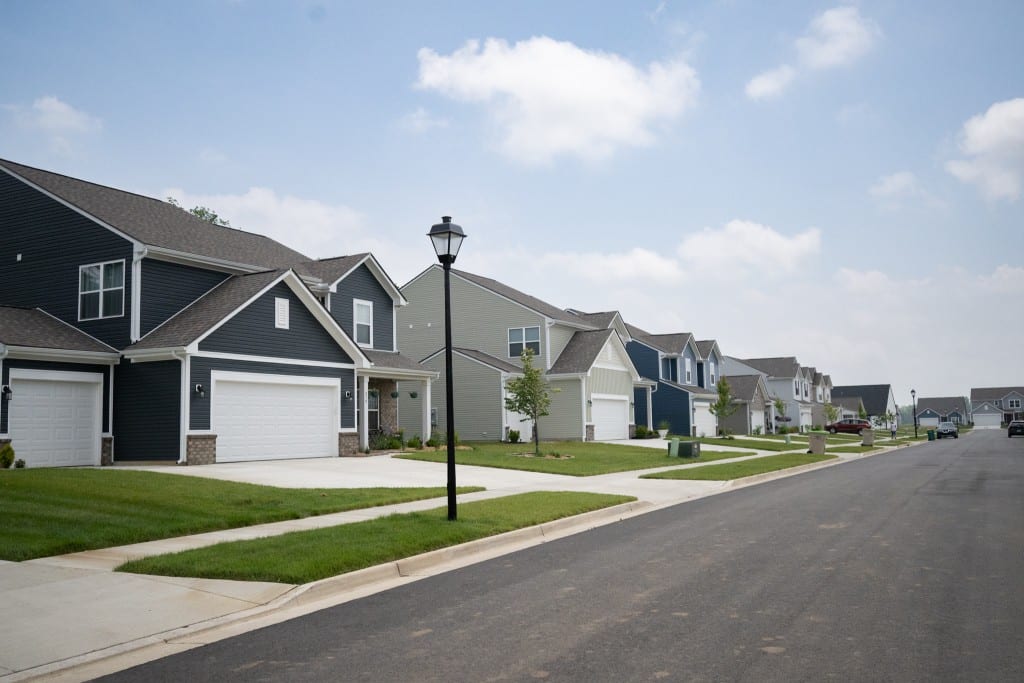
One of the strongest signs of confidence in Clark County real estate is the growth of new housing developments. Carpenter pointed to several communities that have expanded local options, including Melody Parks, Bridgewater, and Sycamore Ridge, along with new builds on Fountain Avenue.
Carpenter says these new-build communities are drawing attention from both local buyers and people moving in from larger metro areas. He adds that Springfield’s central location and lower price point make it attractive to buyers coming from larger, nearby markets. That winning combination is helping Clark County compete for residents who want more house for their money.
“I think Springfield is a central place for buyers coming from Columbus, Dayton, and Cincinnati, and it’s a lot more affordable here.”
This aligns with the observations of one expert at realtor.com. Nadia Evangelou, principal economist and director of real estate research, says migration remains a key driver of housing demand. This is due to the fact that people continue to seek more affordable areas.
“The South still leads, but the Midwest is gaining momentum, so we can expect stronger housing activity in those regions,” she says.
With respect to the Midwest in particular, Evangelou says Ohio stands out for its affordability and better supply-income alignment.
“A $75,000 household can afford about 50% of listings in Ohio compared to 25% nationally,” she says. “The state also benefits from a stable job market and improving migration trends. Specifically, Ohio reversed outflows in 2024 and is seeing net domestic migration gains in 2025. Because it relies less on international migration than most states, it’s less exposed to uncertainty, which should help keep the market more stable than the national average.”
Regional migration may be one thread in Clark County’s housing story, but immigration is another whose impact can’t be overstated. Today, as many as 15,000 Haitians reportedly live in Springfield, up to one-quarter of the population.
While Goff notes that Haitian households represent a small share of the organization’s total client base, they’re participating in the market and seeking guidance on how to buy homes here. Similarly, Florence says her peers across the local market have worked with Haitian families and seen them invest across a wide range of neighborhoods and price points.
That investment has produced outcomes. Goff highlights a seven-home project built on Clifton Avenue that’s part of a neighborhood revitalization plan.
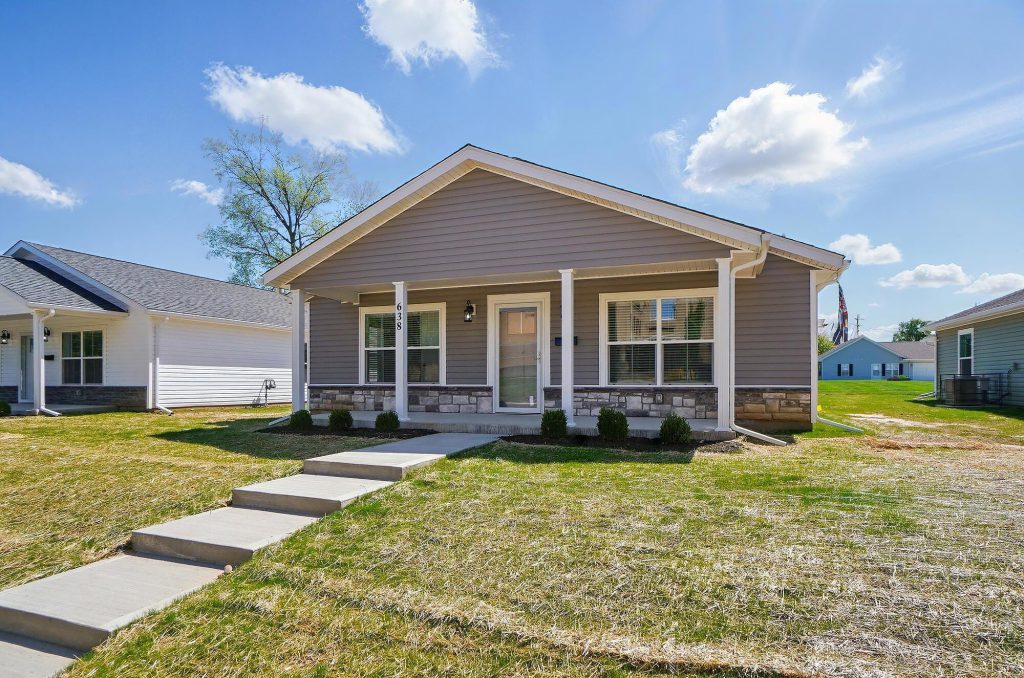
“One of those homes we built last year went to a Haitian family,” she says. “So we were really proud about that as well.”
Goff’s comments add a practical layer to the broader debate around immigration and local economics. In Clark County, at least some Haitian families are renting and working locally. They’re also taking steps toward long-term ownership and neighborhood investment.
Even when households have income or savings, credit can still keep them from buying. That’s especially true for immigrants new to the United States, younger adults, and families rebuilding after financial setbacks like bankruptcies.
However, Goff notes that some Haitian households come in with something many American buyers lack: cash savings.
“Some [Haitian] families… have a lot of money saved, which is not common for today’s American households.”
But savings alone don’t solve the problem. Buyers still need credit history, documentation, and often time. For families who are new to the country, it can be hard to build quickly.
These same issues affect many non-immigrant buyers, too. Goff says some clients can buy in as little as two months if their credit is already in good shape. Others need six months, a year, or even two years to become mortgage-ready.
That longer timeline reflects a tougher market. In Goff’s experience, buyers need stronger credit, better savings, and a clearer plan than they did when rates were lower.
***
For renters, the changing economy has also made things tougher. Sally Smith* has lived at City View Apartments in Springfield for nearly 14 years. She was the very first tenant in her unit, a two-bedroom with a garage and a front yard in the government-subsidized senior housing complex.
“As soon as they were built, I was the first one,” she says. “Nobody else had been in this apartment.”
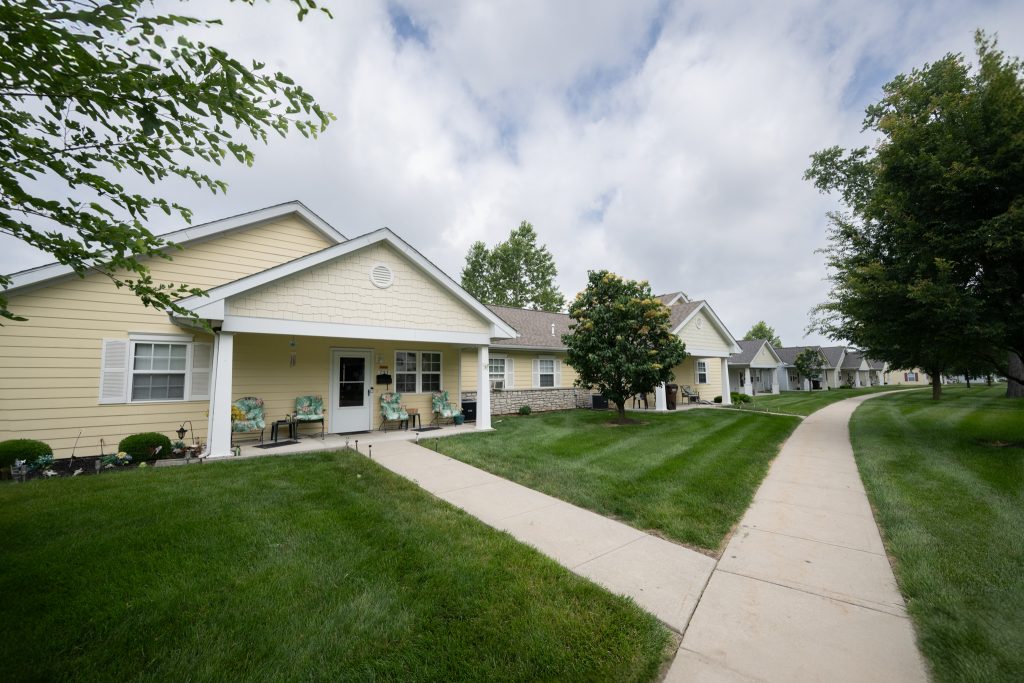
Smith moved to Springfield from Dayton and watched the complex go up from across the street, where her daughter once lived.
“It was nothing but a field over here, and then one day I looked up and they were doing some surveying,” she says. “I got in here on the ground floor.”
The Neighborhood Housing Partnership of Greater Springfield (NHP) partnered with the City of Springfield and used Neighborhood Stabilization Program funds under the American Recovery and Reinvestment Act of 2009 to build 12 new senior apartments on Drexel Avenue. These units are available to residents aged 55 and older whose incomes don’t exceed 50% of the annual median income.
The initial deal that drew Smith in has gotten steadily more expensive. She started at $400 a month. Today she pays $650, a jump totalling more than 60% over 14 years. She now covers a water bill she didn’t have before, too.
“When you’re on a fixed income,” she says, “it makes no sense. Everything is going up, so why would you take rent up?”
She suspects inflation drives the increases but says no one from the NHP provided a reason per se.
Even so, she has no plans to leave.
“I couldn’t find any place else for the money that I spend,” she says. “For $650, you can’t do any better. Of course, I would rather be paying $400.”
Smith has a blunt assessment of the local housing supply. She sees construction around town, but she says few properties meet basic standards.
“They don’t have enough decent places for people to live,” she says. “You got these big raggedy houses with mice running in and out of them.”
By her estimate, the people who stay are mostly older residents who have been here for years. At City View, turnover is rare.
“Most people who come here, they don’t leave,” she says, “because it’s the cheapest place.”
Speaking of mobility, Smith no longer drives. Bad legs ended that. Yet her nearest grocery store is located more than 3 miles away, with no walking route. Her youngest daughter steps in every week.
“I get to go out every Friday. I feel like a little kid,” she says. “I get to go to Walmart, the grocery store, the bank, whatever I have to do.”
For now, City View remains her anchor.
“If you don’t have an income or a small amount of money coming in once a month,” she says, “this is kind of like one of the best places to live.”
Related Articles
What would the termination of Haitian TPS mean for Springfield’s economy?
Springfield’s public officials cite recent economic gains, but the potential of mass deportation of Haitians could reverse progress. And no one wants to talk about it.
The Bushnell Building: A History in Springfield Entrepreneurship
The Bushnell Building, a historic structure in downtown Springfield, has been renovated to hold space for offices, restaurants, and events under the supervision of James Lagos.
Historic properties in Springfield on the auction block
Springfield is reinventing its downtown – including the renovation and auction of historic buildings.