
Clark County Combined Health District’s four pillar plan for 2026
The Clark County Combined Health District is preparing to launch a new health care plan. The new Community Health Improvement Plan, or CHIP, focuses on four pillars – chronic disease, mental health, maternal and infant health and community stability.
This plan is a result of a multi-year examination of healthcare in Clark County, based on data from the Community Health Assessment. Health Commissioner Chris Cook says the Community Health Assessment takes two years’ worth of data gathered from community partners to build a plan.
“We get everybody to the table,” he says, calling the work a “multi-sector collaboration.”
The steering committee for the Community Health Assessment involves input from over 30 organizations, including nonprofits, government organizations, and area colleges. Work on the latest project began nine months ago. Cook says it typically takes seven years, or two cycles of Community Health Assessment and Community Health Improvement Plans, to see progress on issues. The current version of the Community Health Assessment was published in July 2025.
Deputy Health Commissioner Gracie Hemphill explains the four priorities were determined through community input, six focus groups and multiple feedback sessions. She says community feedback was “loud and clear.”
Maternal, Infant, and Sexual Health
The CHA lists three primary points for Maternal, Infant, and Sexual Health. These are reducing the teen birth rate, reducing the syphilis rate, and reducing infant mortality.
Cooks says one overall area of focus for the district has been ensuring a “safe space for healthcare needs.”
Within Clark County’s population is a significant number of Haitian immigrants, which has presented a unique set of challenges, like language barriers and healthcare culture. Cook says Haitian immigrants come from a culture where preventative medicine and prenatal healthcare aren’t common. This presents an additional challenge; many mothers who may benefit from preventative treatment may not be aware that it is available. CCCHD says 23% of mothers in the county receive inadequate prenatal care.
“We follow the data, we let that drive our decisions,” Cook says.
CCCHD estimates there are anywhere between 10,000 and 15,000 Haitians in the community. It began tracking births in the community in 2022 and extrapolates that roughly 1,400 children have been born since 2021. CCCHD shared a startling statistic: within those births, roughly 25% to 30% of infant deaths in the county are from Haitian families. Roughly 12% of babies born in the county are preterm. Overall, the county has a rate of 8.2 deaths per 100,000 births, which is higher than Ohio’s rate of 6.9.
CCCHD has hired three Haitian Creole translators to assist in helping the community. Though digital tools exist, Cook says there is “no substitute for an in-person interpreter.”
The CHA identifies sexual health and sexually transmitted infections as additional community concerns: “Women between the ages of 15 to 19 in Clark County have a higher birthrate than Ohio because they have not received sufficient sexual education and have limited access to birth control.” CCCHD also reports that Chlamydia rates in the county are roughly 8% higher than Ohio’s rates.
Mental Health
CCCHD writes on the CHA website, “It is important to help those who are in crisis in the moment while also focusing heavily on evidence-based prevention strategies to stave off future crises.” In the CHA, it lists improving connections to trusted adults, decreasing youth suicidal ideation, and decreasing overdose rates as areas of focus for mental health in the county.
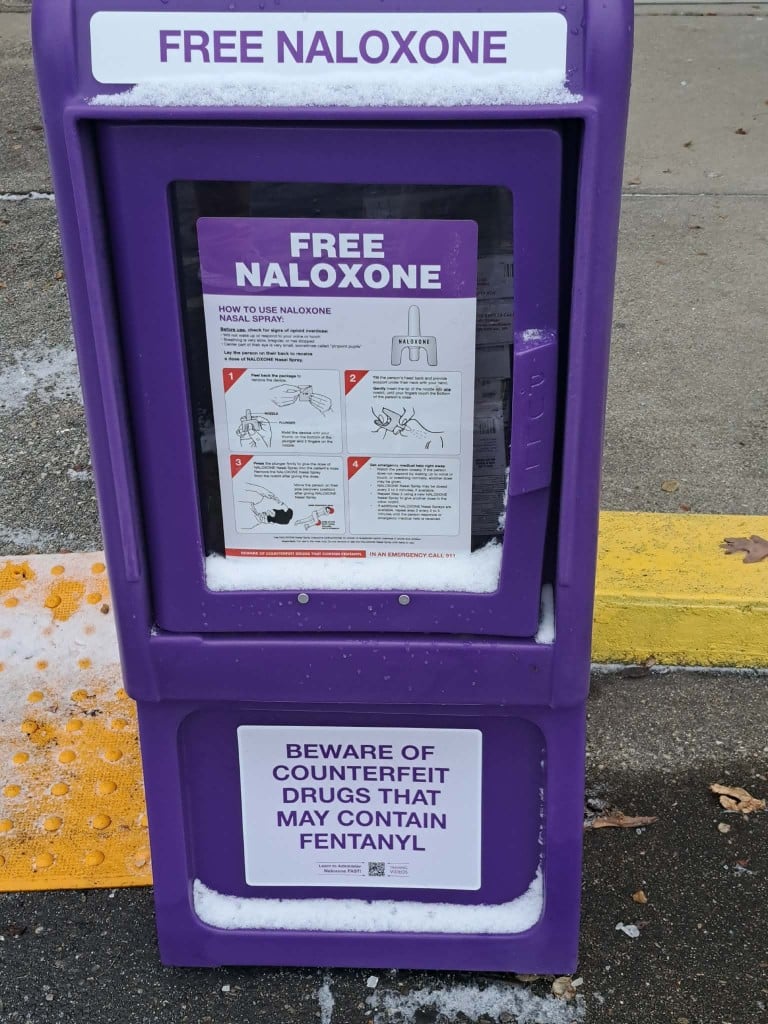
CCCHD reports that overdose fatality rates in the county are higher than the rest of Ohio. Cook says there’s been a robust response to address substance abuse. The CHA lists goals of reducing overdose deaths, increasing enrollment in substance abuse programs, and increasing the availability of naloxone.
Recently, the district commissioned its first Narcan vending machine, which is available at the Salvation Army on 15 South Plum St. CCCHD has also created a Narcan pickup option at their offices at 529 East Main St.
CCCHD reports 42% of high schoolers feel they do not have a caring adult to talk to. The district also reports 36% of high school students feel sad or hopeless for two weeks or more. The CHA lists the root cause as, “Parents are stretched thin and lack skills to build trusting relationships with their children.” The majority of emergency department visits for suicidal people come from residents aged 15 to 34.
The data comes in part from the Youth Risk Behavior Survey. The census took feedback from 3,824 students from 13 high schools in the county. The CCCHD says, “Addressing mental health and substance use problems can proactively help our communities be and stay well: now and into the future.”
Chronic Disease
CCCHD says more years of life are lost in the county prematurely compared to Ohio and the United States at large. The top two leading causes of death in the county are heart disease and cancer. Since 2018, cancer, accidents, and chronic lower respiratory diseases have decreased, while cerebrovascular disease and diabetes have increased as leading causes of death. The CHA shows that the leading causes of death among people under 44 in the county are accidents.
Emergency Department visits have been on the rise since 2022 for heart disease-related issues. Increasing obesity, high cholesterol, smoking, high blood pressure and sedentary lifestyles are all listed as causes behind the statistic.
CCCHD writes, “We also know that where a person lives, their income level, and their race can be predictive factors for chronic disease. These societal inequities can make it more difficult for some individuals to adopt healthy lifestyles. We strive to address both individual behavior and the societal inequities to help our residents live healthier, longer lives.”
The department plans to address the issues through improving food insecurity, decreasing adult tobacco use, improving adult physical activity, decreasing diabetes mortality and early cancer screenings.
Housing and Neighborhood Stability
Cook and Hemphill say one area that has grown in need since the last CHIP cycle is a need for a community plan. This pillar of the plan includes areas of focus such as homelessness, housing, and violent crime.
Hemphill shared that this approach to healthcare came out of incoming data and the community listening sessions. One area she highlighted was that between 6% to 12% of households were found to be without running water in the county.
“It’s identified as a need just by living here,” Hemphill says.
CCCHD reports youth homelessness is higher in Springfield compared to Ohio and the rest of Clark County. The latest CHA also reports that violent crimes within the county have been rising over time.
Cook explains there’s a need to engage with people’s lived experiences. He says the need for more authentic community engagement is being represented in the next strategic plan. An example he’s highlighted is in the department’s employment of WIC breastfeeding experts. Employees working in the program are required to have used the program themselves to bring expertise and empathy in navigating it. Cook shares that a key component of successful service is listening to his staff and community.
“Neighborhoods burdened by inadequate housing, environmental hazards, and high rates of violence can lead to a host of health disparities, including higher rates of chronic diseases, mental health issues, and reduced life expectancy,” CCCHD reports. “Recognizing this, the Housing & Neighborhood Stability priority area is focused on building resilient neighborhoods that support the health and well-being of Clark County residents.”
“The way we deliver services has to be flexible and adaptable,” Cook adds.
Related Articles

TPS limbo puts financial strain on Springfield’s Haitians, slows down their businesses
Food insecurity, housing instability, declining small business revenue, and exit planning reshape daily life as families navigate legal and financial uncertainty.

The original ‘wine moms’ are in Ohio. They’re mobilizing to support Haitians in Springfield.
Katie Paris founded Red, Wine & Blue to harness suburban women’s political power — now more than 600,000 members are deploying it to oppose ICE in their communities.

Fear, faith and preparation as TPS expiration nears and ICE could be closing in on Springfield
In Springfield, faith-based coalitions are creating emergency hubs to care for children — and churches are preparing for their sanctuaries to be breached.

